









Kitchen Conquest: Navigating the Multifaceted World of Fast Food Simulator
Overview: Stepping into the World of Fast Food Simulator
As an experienced gamer, I’ve found that sometimes the simplest premises can evolve into the most immersive experiences. Fast Food Simulator is one such title that transforms the typical fast-food environment into a thrilling simulation adventure. From managing a virtual eatery to overcoming hectic rush hours, the game challenges both your management acumen and reflexes. While it may seem straightforward at first glance, there’s a depth and nuance that invites players to explore intricate mechanics, clever upgrades, and unexpected storylines that make the game a must-play.
Gameplay Mechanics and Immersion
One of the strongest aspects of Fast Food Simulator is the intricate gameplay mechanism. The simulation goes beyond the usual time-management tasks. You are responsible for not only serving customers but also designing the layout of your fast-food joint, ordering supplies, and even customizing recipes. The game continuously tests your ability to multitask, making it an engrossing challenge for those who enjoy balancing several tasks simultaneously. It’s a game where making strategic decisions in real-time can lead to efficient service or a chaotic backlog that tests your quick thinking.
For those who enjoy tweaking settings and challenging the norm, there’s plenty of room to experiment with cheats and mods. These modifications can radically alter your gaming experience by offering additional layers of customization. Whether you’re a perfectionist crafting the ideal burger joint or just seeking a laugh as you experiment with surreal combinations, the game adapts to your style. An interesting facet to note is that some modifications can help streamline resource management, while cheats might sometimes open up alternate gameplay pathways.
Visuals, Audio, and Atmosphere
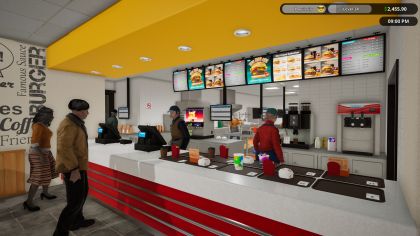
The visual design of Fast Food Simulator strikes a balance between realism and cartoonish charm. With detailed animations illustrating the frantic pace of a busy restaurant and the subtle humor behind character interactions, the game has a personality of its own. The graphics are polished enough to create an immersive setting, yet they remain straightforward, avoiding unnecessary complexity. As an experienced gamer, I appreciate how the design aligns with the gameplay; it feels intentionally crafted to support a clear, enjoyable experience without overwhelming the player.
The audio landscape complements the entire experience superbly. From the sizzle of grilling to the murmur of conversations and the ambient sound of a bustling kitchen, every auditory element is designed to pull you deeper into the simulation. The background music changes pace depending on the in-game scenario, ramping up during peak hours and calming when the pace eases. This dynamic scoring, along with the realistic sound effects, creates an authentic and engaging environment that truly invites you to play again and again.
Storyline and Progression
While the gameplay is structured around managing a fast-food outlet, Fast Food Simulator introduces a storyline that evolves through in-game events and challenges. Initially, you start as a small-scale operator juggling daily tasks, but as you progress, challenges become more elaborate. Unexpected events, such as handling supply chain issues or responding to changes in customer trends, add a narrative flair that distinguishes the game from other simulation titles.
The progression system is rewarding, offering both technical and cosmetic upgrades. Every milestone reached or challenge overcome is accompanied by a sense of achievement that fuels further progress. This gradual escalation in difficulty, combined with narrative twists, maintains the player’s engagement and creates a layered experience that feels both authentic and rewarding. Whether you choose to meticulously plan every decision or rely on spontaneous reactions, the game ensures that no two sessions are identical.
Multiplayer Experience and Community Engagement
Fast Food Simulator isn’t confined to a single-player environment; it offers a multiplayer mode where you can compete or cooperate with other enthusiasts. The multiplayer aspect adds an entirely new dynamic as you can either collaborate to build a fast-food empire or face off in challenges that test who can serve customers fastest under pressure. This feature enhances replayability, as competing with friends or other players online is both challenging and immensely satisfying.
Online leaderboards and community-run events further enrich the social experience. The community is vibrant, with gamers sharing insights on clever cheats, effective mods, and strategic tips for navigating complex in-game scenarios. For those who like to tweak their experience using various tweaks, the game’s developers have ensured that community mods are not only supported but encouraged, fostering an open environment where creativity is celebrated.
Customization, Cheats, and Mods
One of the elements that truly sets Fast Food Simulator apart from its peers is the extensive customization available. Building your unique restaurant isn’t just about aesthetic choices; every customization has an impact on gameplay. The ability to use modifiers and adjustments, including cheats and mods, allows you to explore endless possibilities, pushing the boundaries of what you can create within the game.
The community around Fast Food Simulator has already produced an impressive array of mods that expand on the basic gameplay mechanics. Whether it’s additional recipe options, customized boss challenges, or even unique visual styles, you can find creative mods that cater to any playstyle. For instance, some mods refine the simulation’s difficulty, streamlining certain resource management tasks, while others offer entirely new gameplay modes and challenges that keep the experience fresh.
Performance and Stability Across Platforms
Performance-wise, Fast Food Simulator is a well-optimized title that runs smoothly across most systems. The game has been meticulously engineered to operate seamlessly whether you choose to install it on your PC, Mac, or even Android device. Although the primary experience is highly optimized for modern platforms, good balance ensures that you have an opportunity to play on less powerful devices as well.
The developers have also provided regular updates that not only add new content but also improve stability and performance. Even in high-stress scenarios that simulate peak restaurant hours, the game maintains an admirable level of responsiveness without lagging. Players have noted that even when utilizing mods or implementing cheats for additional complexity, the game holds steady across various platforms.
Learning Curve and Accessibility
The complexity of Fast Food Simulator may initially seem daunting, particularly for gamers new to simulation genres. However, the game does a commendable job at gradually introducing mechanics. Early stages are designed to be user-friendly, providing ample tutorials and prompts that guide players through basic operations. As you become more accustomed, the challenges ramp up, presenting opportunities to apply your newfound skills in more demanding scenarios.
Accessibility is a high priority in this game. From intuitive controls to a well-designed user interface, it’s clear that the developers intended for the game to be approachable to both veterans and newcomers. Even if you’re exploring the option to install various cheats or mods early on, the game’s structure ensures that you have enough guidance to prevent overwhelming moments. Educational tooltips and dynamic hints make the transition from novice to seasoned manager as smooth as possible.
Community Insights and Developer Communication
It’s refreshing to see how much emphasis has been placed on engaging the community. The developers actively respond to player feedback, tweaking game balance, and addressing any issues promptly. Regular developer blogs, interactive forums, and community events attest to a robust support system that instills confidence in even the most critical players.
Discussions about cheats and mods flow continuously on various gaming platforms. Whether it’s a new update that changes how you approach gameplay or community-created modifications that enhance the simulation, the dialogue around Fast Food Simulator is both animated and constructive. For gamers who prefer to explore alternate avenues through mods, quick tutorials and comprehensive guides provided by the community are invaluable, streamlining the process of tweaking your experience.
Expert Opinion: The Final Verdict
Fast Food Simulator represents a fresh twist on the simulation genre. It deftly balances the often frenetic pace of restaurant management with a detailed, immersive narrative that keeps you coming back for more. The core experience of managing a fast-food establishment is enriched by the vibrant community, clever use of mods and cheats, and accessibility across multiple platforms. For someone like me who has experienced a wide range of simulation games, this title offers a harmonious blend of complexity and charm that’s hard to find elsewhere.
What truly stands out is the game’s capacity to invite creative experimentation. Whether you decide to follow the standard career path or indulge in some community-inspired mods, Fast Food Simulator offers a level of personalization that makes each session unique. Moreover, the opportunity to play in both single-player and multiplayer modes means that the game manages to capture the spirit of community engagement as well as individual achievement.
In conclusion, Fast Food Simulator is a well-rounded title that caters to diverse audiences. Its seamless integration of strategic management, realistic simulation, and creative customization options creates an experience that is both highly engaging and educational. The developers have successfully merged fundamental gameplay with innovative features, resulting in a game that stands tall among its contemporaries.
For gamers who appreciate robust simulation mechanics, immersive design, and an active community where discussions about cheats, mods, and strategic setups are common, Fast Food Simulator deserves a spot in your library. If you’re looking for an experience that challenges your multitasking skills while rewarding you with endless customization opportunities, this game is ready for you to install and explore. Simply download the game, dive into its dynamic world, and see if you have what it takes to run a top-tier fast-food operation.
How to download Fast Food Simulator
Fast Food Simulator is readily available on multiple platforms. The game can be accessed on PC, Mac, Android, and even through various unblocked environments where restrictions may exist, such as school or work networks. The game is free to play at its base level, although you can purchase additional content or in-game items to enhance your experience. It is advisable to download it from the official website or trusted app stores to ensure a safe and secure installation.
To install Fast Food Simulator, simply visit the download page on your preferred platform, follow the on-screen instructions, and install the game on your device. For PC and Mac users, a standard installer is provided, while Android users can download the game directly from the Play Store. The minimum system requirements include a modest CPU, 4GB of RAM, and a dedicated graphics card to ensure smooth performance. Cheats and mods are available and allowed, providing creative ways to tweak the game to your liking. Fast Food Simulator can also be played unblocked in environments with restrictions, giving you the flexibility to play wherever you feel most comfortable.
To download the app, you will get links to the Official Website and/or official digital markets.